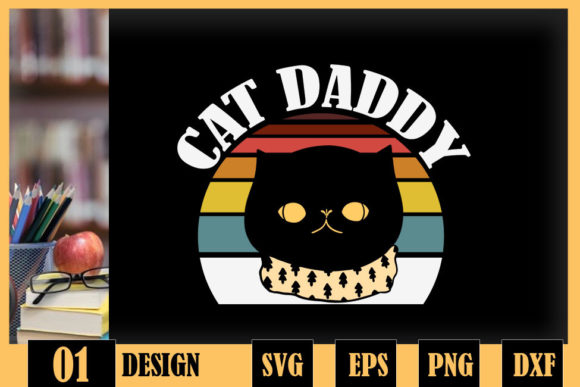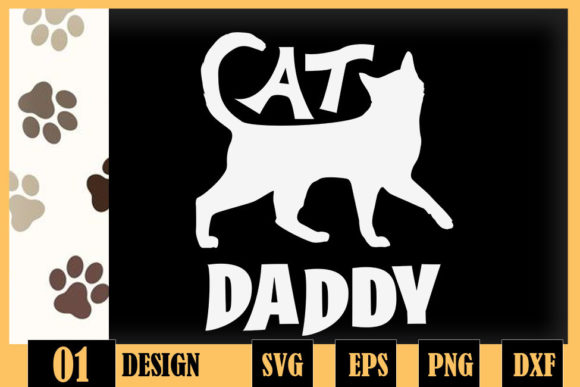
Cat Daddy Funny Cat Dad Simple Lettering
As an embroidery designer who spends more time looking at stitch lines than actual cats, I approach every new digital asset with a healthy dose of skepticism. The market is flooded with generic clipart that looks fine on a screen but falls apart under the needle. However, when I first pulled up Cat Daddy Funny Cat Dad Simple Lettering, it caught my eye not because of complex shading, but because of its confident simplicity. This isn’t just another novelty graphic; it’s a functional piece of design that understands the medium it lives in.
The core appeal of this design lies in its straightforward typography. In the world of machine embroidery, simple lettering is often harder to execute perfectly than intricate pictorial designs because there is nowhere for errors to hide. If the kerning is off or the spacing is uneven, the entire piece looks amateurish. Cat Daddy Funny Cat Dad Simple Lettering avoids this pitfall by relying on clean, bold shapes. It creates a mood that is casual, humorous, and instantly recognizable. It feels like something you would see on a high-end boutique t-shirt rather than a mass-produced discount item. For designers looking to add personality to their custom apparel without overwhelming the fabric, this is a strong contender.
Real-World Application: From Screen to Stitch
To truly evaluate a design, you have to imagine it on a finished product. Let’s talk about a specific scenario: preparing a batch of custom embroidered tote bags for a local craft fair or an Etsy shop. You want something that appeals to the "cat dad" demographic—usually men who appreciate humor but might be intimidated by overly cute or fussy designs. This design hits that sweet spot. The layout is balanced, allowing it to sit comfortably on the chest of a sweatshirt or centered on a canvas tote.
I visualized this design stitched onto a heavyweight cotton canvas bag. Because the lettering is simple, it translates beautifully to dense fill stitches or even a crisp satin border if the file supports it. The contrast between the thread and the dark fabric would pop, making the message clear from across the room. It works equally well as a personalized gift for Father’s Day or Christmas. Imagine gifting a baby onesie or a burp cloth with this design; the humor lands differently when applied to nursery decor, turning a practical item into a memorable keepsake. The versatility here is key. It bridges the gap between a gag gift and a legitimate fashion statement.
Where It Shines
This design is particularly effective for products where readability is paramount. It excels on:
- Sweatshirts and Hoodies: The thick fabric provides a stable base for the stitches, ensuring the letters don’t pucker.
- Kitchen Towels and Aprons: A fun addition to a home cook’s gear, especially for the dad who insists on manning the grill.
- Embroidered Patches: If used as a detachable patch for a backpack or jacket, the simple shape allows for easy application and removal.
- Baby Items: Soft fabrics like muslin or fleece can handle the design well, provided the stabilizer is chosen correctly.
For the Etsy seller or small business owner, this design offers high perceived value with relatively low production complexity. It doesn’t require exotic threads or multi-hooping setups, which means faster turnaround times and lower labor costs per unit. When you present a handmade product that looks sharp and professional, customer trust increases. Buyers can tell the difference between a rushed job and one that was thoughtfully designed.
Technical Considerations and Potential Pitfalls
No design is perfect for every situation, and honest review requires pointing out where caution is needed. While Cat Daddy Funny Cat Dad Simple Lettering is robust, it is not immune to the physical limitations of embroidery.
First, consider your hoop size. If you are working with a smaller hoop, ensure the design fits without excessive trimming. More importantly, look at the stitch density. If the letters are filled densely, they may feel stiff against the skin, which is less than ideal for items like baby clothes or lightweight t-shirts. Always test the hand-feel of the finished sample. If the backside of the embroidery feels too rigid, you may need to adjust the tension or switch to a lighter stabilizer.
Fabric choice is critical. This design will struggle on highly textured fabrics like chunky knits or bouclé, where the needle path becomes unpredictable. Similarly, thin or stretchy fabrics require extra care. Without a proper stabilizer, the lettering may distort or gather, ruining the clean aesthetic. Dark fabrics can also pose a challenge if the thread color isn’t chosen carefully. Low-contrast combinations will make the design disappear, so stick to high-visibility thread colors like white, bright yellow, or metallics against dark backgrounds.
Another area to watch is curved surfaces like caps. Embroidering flat text on a curved brim or crown can cause distortion at the edges. If you plan to use this for headwear, test it on a scrap piece of cap material first to ensure the curvature doesn’t warp the letters.
Designer’s Checklist Before Production
Before committing to a full production run, follow these practical steps to ensure quality:
- Scrap Test: Always stitch the design on the exact fabric you intend to use. This reveals issues with puckering, thread breakage, or color bleeding.
- Black and White Mockup: View the design in grayscale to check contrast levels. This helps you decide if the thread colors will stand out enough.
- Stitch Inspection: Zoom in on the digital file (if possible) or the test stitch-out to inspect small details. Are any connecting threads too long? Is the spacing consistent?
- Stabilizer Selection: Match the stabilizer to the fabric weight. Heavy fabrics need heavy stabilizers; light fabrics need tear-away or cut-away options that won’t bulk up the final product.
- Licensing Verification:: Check the terms of use. Ensure you have the right to sell finished items made from this digital embroidery file. Some licenses restrict commercial use or limit the number of units sold.
Final Verdict
Cat Daddy Funny Cat Dad Simple Lettering is a reliable, visually appealing asset for any embroiderer’s library. It captures a specific cultural moment with humor and style, making it relevant for current trends in craft business merchandise. Its strength lies in its clarity and adaptability. It works well for personalized gifts, commercial embroidery projects, and design assets for creative entrepreneurs.
While it demands respect for fabric types and stabilization techniques, it rewards the designer with a clean, professional finish that customers love. It’s not just a funny phrase; it’s a well-executed embroidery project that adds value to any finished product. Whether you are decorating a tote bag design or creating a unique sweatshirt embroidery line, this design is a solid choice that balances humor with technical feasibility. Just remember: the best embroidery starts with careful planning and ends with a quality test stitch.