Your First Mistake Firefighter Women Review
As a designer who spends more time staring at stitch density charts and fabric swatches than actually sleeping, I approach every new digital asset with a healthy dose of skepticism. The market is flooded with clipart that looks great on screen but falls apart under the needle. When I first pulled up Your First Mistake Firefighter Women, I didn’t just see a graphic; I saw a potential bestseller for my own small shop, provided it held up to the rigors of real-world embroidery. This review isn’t about what the file says it does; it’s about how it behaves when you’re trying to create a high-quality, sellable product for a client or a craft fair booth.
The First Impression: Mood and Visual Personality
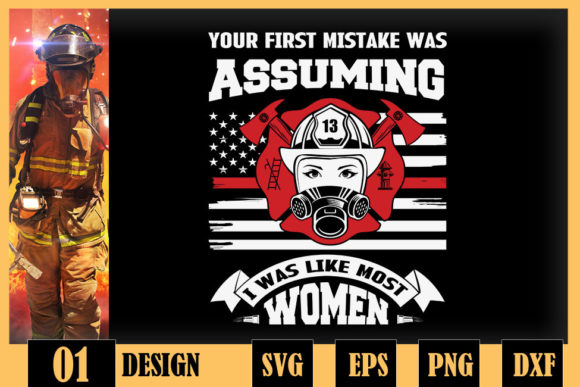
The moment you open the file in your design software—whether that’s Cricut Design Space, Silhouette Studio, Corel Draw, Adobe Illustrator, or Photoshop—you are greeted by a concept that balances humor with respect. The phrase "Your First Mistake" paired with a firefighter theme immediately suggests a narrative. It’s not just a generic fire department logo; it has personality. For an embroidery project, this translates to immediate engagement. Customers don’t just buy a shirt; they buy the story behind the text.
Visually, the layout feels balanced. In machine embroidery, balance is everything. If a design is too heavy on one side, your hoop might wobble, or the tension could go haywire. This design appears to have a solid anchor point, making it ideal for placement on the chest of a sweatshirt or centered on a tote bag. The typography likely carries the weight of the message, which means we need to pay close attention to how those letters will stitch out. Are they blocky and bold? Script and flowing? Knowing the font style helps us predict the stitch type required. For a phrase like this, a mix of satin stitch for outlines and fill stitch for lettering bodies is standard, ensuring readability from a distance.
Real-World Application: Where This Design Shines
I’ve been thinking through specific use cases for Your First Mistake Firefighter Women, and several stand out as natural fits for both personal gifts and commercial merchandise. Let’s look at a few scenarios where this embroidery file would truly perform.
- The Custom Sweatshirt: Imagine a rookie firefighter receiving their first station gear. A sweatshirt embroidered with this design on the back or left chest is a powerful personalized gift. The thicker fabric of a sweatshirt provides a stable base, allowing the stitches to sit flush without puckering. This is a perfect item for holiday embroidery sales or birthday surprises.
- Tote Bag Embroidery: Canvas totes are a staple for craft business items. This design works beautifully as a large central motif on a canvas tote. The durability of the bag matches the rugged theme of firefighting. However, you must ensure your stabilizer choice is robust enough to handle the weight of the design without tearing the bag during removal.
- Baby and Nursery Decor: Firefighters are a classic theme for young boys and girls. A smaller version of this design on a baby onesie or a nursery pillow cover adds a touch of whimsy. Here, thread colors become critical. Soft pastels or bright primary colors can transform the mood from serious to playful, appealing to parents looking for unique handmade products.
- Aprons and Kitchen Towels: For the home cook who happens to be a firefighter’s partner or child, an apron with this design is a thoughtful wedding gift or housewarming present. The casual nature of the phrase fits well in a kitchen setting, adding character to everyday linens.
Technical Considerations for the Savvy Designer
Before you load this embroidery design into your machine, there are practical steps you must take to ensure professional results. Even the best graphics can fail if the technical execution is sloppy.
Stitch Density and Hoop Size: Always check the stitch density before stitching. If the design is too dense for the fabric you are using, you risk needle breakage or thread shredding. Test the design on scrap fabric first. This is non-negotiable. You want to inspect small details and confirm hoop size compatibility. If the design includes intricate lettering, ensure your machine can handle the necessary satin stitch width without overlapping excessively.
Fabric Texture and Stabilizers: The choice of fabric drastically affects the final look. On stretchy fabrics like jersey knit, you absolutely must use a proper stabilizer, such as cut-away or tear-away, depending on the garment’s weight. On textured fabrics like denim or heavy canvas, the texture might obscure fine details. In these cases, simpler designs with bolder lines work better. Avoid placing detailed embroidery on curved surfaces like caps unless you have experience with multi-hoop digitizing or specialized cap frames.
Thread Color Contrast: Visual appeal relies heavily on contrast. If you are embroidering on dark fabric, light threads will pop, but you may need a backing layer to prevent show-through. Conversely, dark threads on light fabric offer a subtle, sophisticated look. I recommend testing your thread colors in black and white mockups within your design software. This helps you visualize the value contrast before committing to expensive specialty threads.
Avoiding Common Pitfalls
There are certain situations where Your First Mistake Firefighter Women might not be the best choice. Be cautious with tiny lettering. If the text is too small, it will become illegible after washing and wear. Similarly, avoid using this design on thin fabrics that cannot support the weight of the embroidery without distorting. Dense stitch areas should be avoided on delicate materials like silk or sheer chiffon, as the pull of the threads can ruin the drape of the fabric.
Also, consider the end-user’s lifestyle. Products that need frequent washing, such as uniforms or play clothes, require durable stitching. If the design has loose ends or long running stitches, they may snag. Ensure your digitizer (or the file creator) has optimized the design for durability, perhaps by incorporating applique design elements or reinforcing key areas with additional satin stitches.
Commercial Viability and Brand Consistency
For Etsy sellers and small shop owners, this design offers strong potential. It taps into a niche market—firefighting enthusiasts—that is passionate and loyal. By offering personalized options, such as adding a name or date below the main graphic, you increase the perceived value of the handmade product. This level of customization builds customer trust and encourages repeat business.
However, always confirm licensing before selling finished items or digital products. Verify whether the file allows for commercial use. If you are creating printable mockups or design assets to sell to other makers, clear rights are essential to protect your brand consistency and legal standing. A professional presentation, including high-quality photos of the finished product, will significantly boost buyer engagement.
Final Verdict
Your First Mistake Firefighter Women is more than just a cute graphic; it’s a versatile tool for creative entrepreneurs. Whether you are decorating custom apparel, crafting personalized gifts, or expanding your digital embroidery file library, this design brings a blend of humor and heart to your projects. With careful attention to stitch density, fabric selection, and proper stabilization, you can turn this simple concept into a standout piece that customers will cherish. Just remember to test, test, and test again. That’s the secret to successful machine embroidery.