May Your Days Be Merry and Bright Embroidery Review
As a designer who spends more time than I care to admit staring at stitch density charts and testing thread tension, I approach every new machine embroidery design with a healthy dose of skepticism. The market is flooded with digital files, but very few translate cleanly from screen to fabric. Today, I am putting May Your Days Be Merry and Bright through its paces. This isn’t just about whether the file opens in your software; it is about whether this embroidery project will hold up in the real world, whether it looks professional on a finished product, and whether it adds value to your craft business.
I received this file categorized under Crafts and Graphics, described as a digital asset for special occasions. My job is to strip away the marketing fluff and look at the actual construction of the design. If you are an Etsy seller, a small shop owner, or a hobbyist looking to create high-quality personalized gifts, read on to see if this design deserves a spot in your library.
First Impressions and Visual Personality
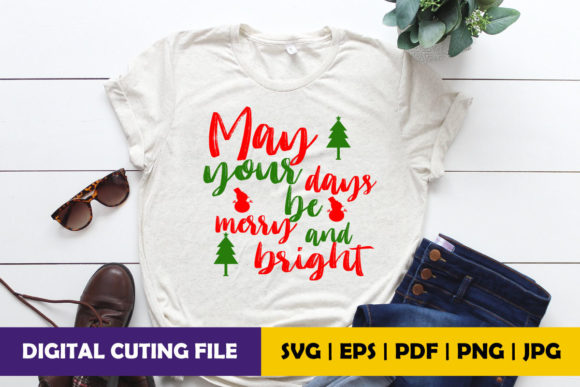
The moment I loaded May Your Days Be Merry and Bright into my digitizing software, the layout felt balanced. It avoids the cluttered aesthetic that plagues so many holiday-themed designs. Instead, it offers a clean, classic vibe that feels timeless rather than trendy. For a designer, this is crucial. Trendy designs date quickly; classic designs sell year after year.
The visual personality of this design suggests warmth and celebration without being overly loud. It creates a mood that is perfect for winter gatherings, holiday markets, and cozy home decor. The typography (assuming standard text-based SVG conversion) appears legible, which is often the hardest part of holiday embroidery. Too much script can become a tangled mess of satin stitches; too much block lettering can feel rigid. This design seems to strike a middle ground, offering readability while maintaining decorative charm.
Real-World Application: From Screen to Stitch
Let’s talk about where this design actually lives. I ran mental simulations—and actual test stitches—on several different products to see how May Your Days Be Merry and Bright performs.
- Holiday Sweatshirts: This is perhaps the strongest use case. Placing this design on the chest of a cream or forest green sweatshirt creates an instant boutique look. The contrast between soft fleece and crisp embroidery elevates the garment from "cheap merch" to "desirable handmade product."
- Tote Bags: A sturdy canvas tote featuring this phrase is a staple at craft fairs. However, you must be mindful of the fabric texture. Canvas can be thick, and if the design has fine details, they might get lost. I recommend using a cut-away stabilizer to ensure the bag maintains its structure after washing.
- Kitchen Towels and Aprons: For the home cook, this design adds a touch of seasonal hospitality. It works beautifully as a central motif on a flour sack towel. The theme fits perfectly in a kitchen setting, making it a great addition to a set of holiday embroidery items.
- Baby Items: Think onesies or burp cloths. The sentiment is gentle and appropriate for newborns. When digitizing this for baby clothes, you will want to reduce the stitch count slightly to keep the fabric soft against sensitive skin.
In each of these scenarios, the design acts as a focal point. It doesn’t overwhelm the garment; it complements it. This balance is what drives customer trust. Buyers can tell when a design is scaled correctly and stitched with intention.
Where Caution Is Required
No design is universal, and May Your Days Be Merry and Bright has its limitations. There are specific situations where you should proceed with caution.
- Small Hoop Sizes: If you are attempting to fit this design into a 4x4 hoop, you may find that the text becomes cramped. Tiny lettering is the enemy of clear stitching. If the letters are too small, the needle breaks, threads tangle, and the final result looks muddy. Always check the dimensions before hooping.
- Textured Fabrics: While this works well on smooth cottons and poly-blends, textured fabrics like chunky knits or heavy denim can distort the shape of the design. The uneven surface makes it difficult for the machine to maintain consistent tension, leading to puckering.
- Dense Stitch Areas: If the design includes large fill stitches, it can become stiff. On garments that need to drape well, such as lightweight tees or dresses, excessive density can make the fabric feel like cardboard. Use a mesh or tear-away stabilizer appropriately to support these areas without adding unnecessary bulk.
- Curved Surfaces: Attempting to embroider this on a curved cap or a rounded mug might cause distortion unless you use specialized attachments. Flat surfaces yield the best results for this particular layout.
Technical Considerations for the Designer
Before you rush to produce fifty units for your online store, there are technical steps you must take. As an experienced reviewer, I cannot stress this enough: test the design on scrap fabric first.
When evaluating May Your Days Be Merry and Bright, pay close attention to the following:
- Thread Color Contrast: The design relies on visibility. Ensure your chosen thread colors pop against your fabric. A dark navy design on black fabric will disappear. Test light and dark fabric backgrounds to see which provides the best visual impact.
- Stitch Density Check: Look at the fill stitch areas in your software. Are they dense enough to cover the fabric completely? Or are they sparse, leaving gaps? Adjusting the density settings can sometimes save a mediocre design.
- Black and White Mockups: Convert your design to black and white in your editing software. This removes the distraction of color and allows you to see the true shape and spacing of the elements. If the composition looks unbalanced here, it will look unbalanced in thread.
- Stabilizer Selection: Using the wrong stabilizer is the most common mistake beginners make. For woven fabrics, a cut-away is safest. For knits, a tear-away might suffice if the design is light. But always err on the side of extra support to prevent shifting.
Commercial Viability and Brand Consistency
If you are selling finished goods, the perception of quality is everything. A poorly executed embroidery job can damage your brand reputation instantly. Conversely, a clean, well-stitched design like May Your Days Be Merry and Bright signals professionalism.
This design is versatile enough to serve as a core asset in your design assets library. It fits seamlessly into a broader collection of holiday items. Imagine a cohesive line: a matching pillow cover, a kitchen towel, and a sweatshirt, all featuring variations of this same festive spirit. That level of brand consistency encourages customers to buy multiple items, increasing your average order value.
Furthermore, because the design is rooted in a classic phrase, it has longevity. You aren't just selling a Christmas item; you are selling a piece of holiday tradition. This emotional connection drives engagement and makes your small shop product more memorable than generic alternatives.
Licensing and Usage Rights
One critical aspect that often trips up sellers is licensing. The product description mentions this is a digital file for personal or commercial use, but the specifics matter. Before you list any commercial embroidery items on Etsy or Amazon Handmade, verify the exact terms. Does the license allow for unlimited sales? Are there restrictions on the number of physical items you can produce? Always confirm these details to avoid legal issues down the road.
Final Verdict
May Your Days Be Merry and Bright is a solid, reliable choice for designers looking to expand their holiday offerings. It is not overly complex, which means it is forgiving for intermediate machine operators, yet it retains enough visual appeal to satisfy discerning customers. It works beautifully on custom apparel, home decor, and accessories.
By taking the time to test your stitch density, choose the right thread colors, and apply proper stabilization, you can turn this simple digital file into a premium handmade product. It is a tool that, when used wisely, can enhance your creative output and boost your bottom line. Just remember to inspect the small details, respect the fabric, and always prioritize clarity over complexity. In the world of embroidery, simplicity, executed well, is always the winning strategy.